
 Recollections from World Architecture Festival (WAF) in Amsterdam (4-6 December 2019) and Freiburg’s “Creative Communities” workshop (28 – 29 November 2019)
Another WAF behind us and we’re happily thinking back on increasingly familiar faces amongst regulars and the deepened friendships that we have been fortunate to make through the Festival.
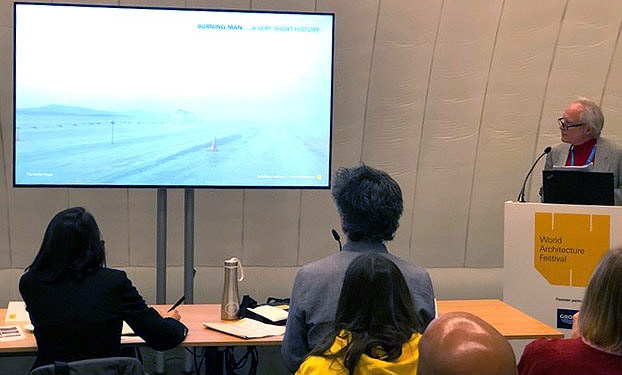
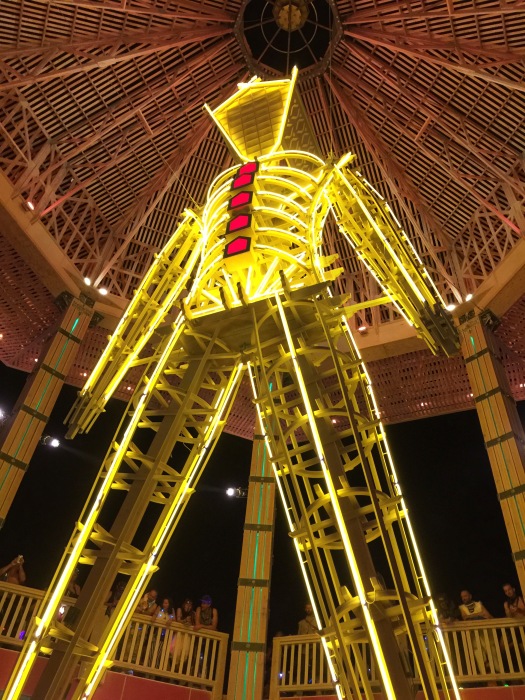
This year, John Marx presented his Burning Man project for The Golden Cage (see our previous blog post) and joined an illustrious panel of judges to select the winner for the best “Use of Colour” Category at the World Architecture Festival Awards.
Fellow judges included Axel Demberger from Eastman and Marcos Rosello of aLL Design. The jury was chaired by Sir Peter Cook, a Royal Academician and Founder of the celebrated studio Archigram. As the winning scheme, the group of four judges picked Archimatika’s project, “Comfort Town.” It is a vibrant 180 low-rise apartment building development located in Kiev, Ukraine. Archimatika say the project represents the “first daring color solution for a residential neighborhood in the country.”
The WAF “World Building of The Year” was selected from the 20 winning completed building category entries and is local to the Festival’s host country: The Netherlands. A public library in Tilburg, the project is the result of a successful collaboration between Civic Architects, Braaksma & Roos Architectenbureau as well as Inside Outside/ Petra Blaisse.
Called LocHal, the library, a former locomotive hangar dating from 1932, responds to the current interest in an architecture that minimises its environmental impact through the imaginative reuse of existing building stock. The WAF Awards super jury suggested this in their statement. “This project transformed a significant building which had been planned for demolition. The result has created a physical facility in which a variety of users can meet for a variety of purposes, in this sense the building has become a social condenser.”
The call for architecture to be conducive to social interaction is something that is being increasingly acknowledged and perhaps in the face of the widespread problem of loneliness that is apparent even in the most densely populated urban metropolises. It is something that we at Form4 Architecture strive to address in our projects through placemaking that has a grassroots approach.
Our Creative Communities Workshop in Freiburg took place just before WAF. It was hosted by Ideal Spaces an ongoing research project that is focussed on how we experience and foster togetherness through architecture and art as well as through our communities.
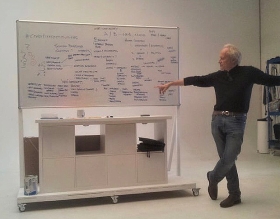
Interestingly, Ideal Spaces is interested in both the design of physical spaces conducive to well-being and the idea of a good place. The catalysts and conditions that lead to designing a better environment are at the heart of much of the work Ideal Spaces carry out through exhibitions, artworks, research events and supporting both interdisciplinary and collaborative methods to challenging dystopia. We look forward to building on this further and to our next WAF in Lisbon in 2020.
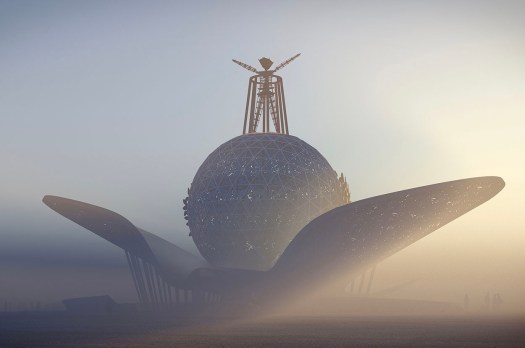 Next month, we’re presenting Golden Cage at the World Architecture Festival in Amsterdam. We designed the pavilion-like sculptural structure for
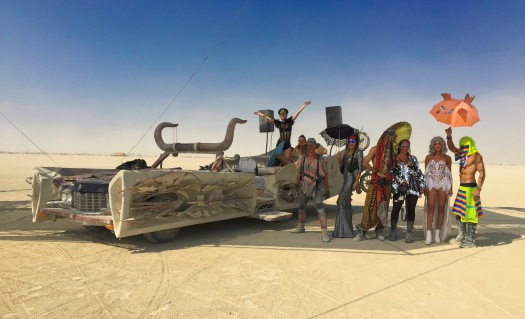
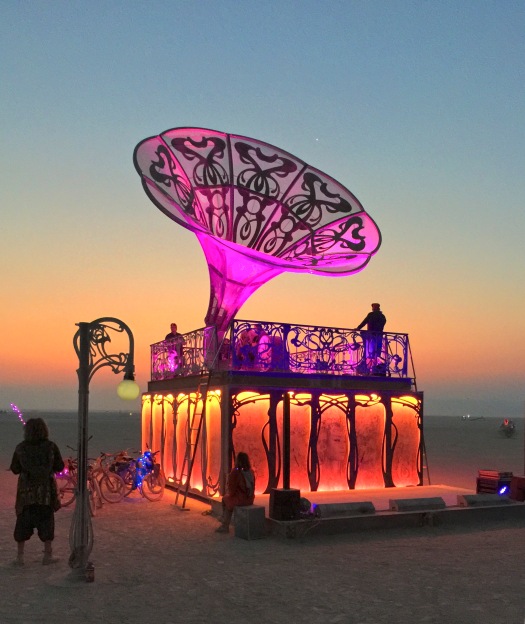
 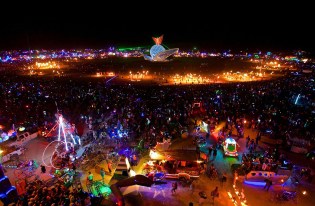 Burning Man has grown to such an extent over the years that it can be described as a city. Caveat Magister’s book title suggests this clearly: The Scene That Became Cities. A book that suggests that Burning Man addresses something essential that is missing in our lives, something that brings us together, makes us feel compassionate and thus human; and allows us to discover a sense of awe and purpose free of conventional notions of usefulness and success. A way of being that is less about rules and more about shared principles or values. This sort of thinking is at the heart of making a strong and thriving community and it is something architects and designers should be more attuned to – particularly in how they conceive a sense of place.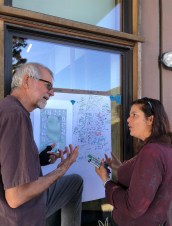

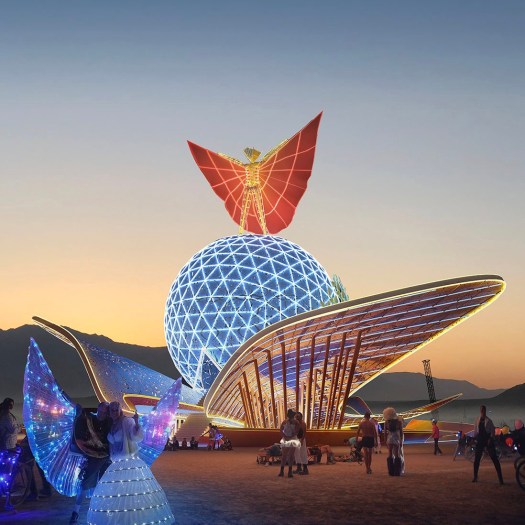
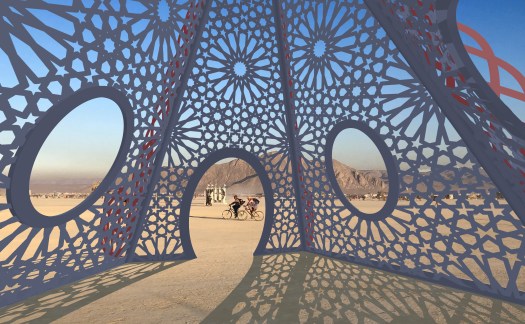
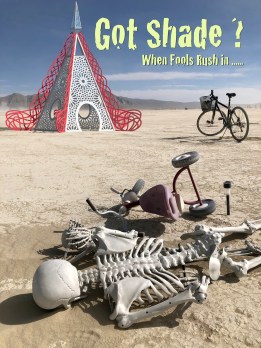
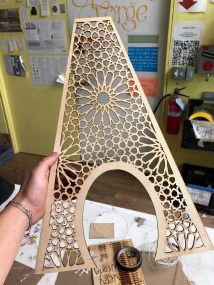
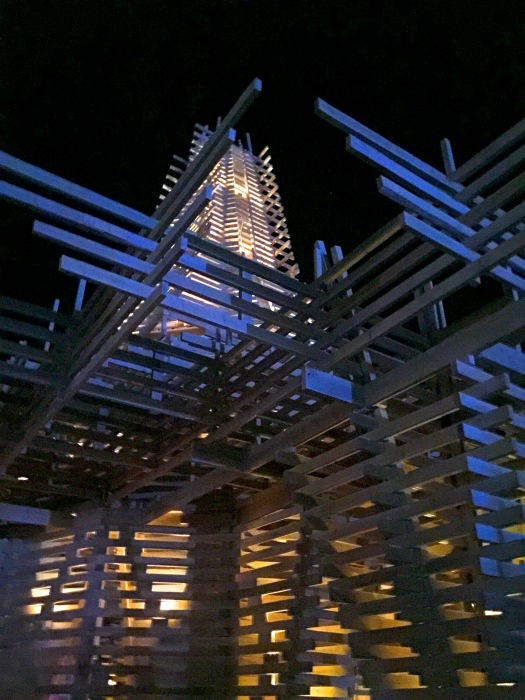
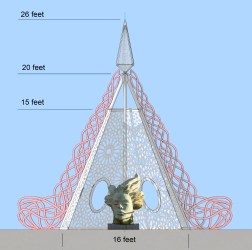 This year I was asked to join an art team as Lead Artist. The vision began with Team Leader Brian Poindexter, who was inspired by the Burning Man 2019 Theme Metamorphoses, to start an Art Project exploring the myth of Andromeda and the expansive nature of the night sky. We decided to challenge the classical myth of Andromeda, wherein a young woman is chained to a rock, left to be devoured by a sea monster that was sent by the Gods to punish her mother for the arrogance of proclaiming her daughter’s beauty. This led ultimately to the project name; Andromeda Reimagined. Within this new narrative, Andromeda saves herself, with the help of her community. The “rock and chains” have been morphed into a story of her inner journey to find strength and purpose in a world of chaos and absurdity. In the spirit of interactivity, we are asking people to write the names and stories of their female heroes on the inside walls of the structure. Following several reiterations, the final art piece takes the form of a 26 foot-tall, five-sided pyramid.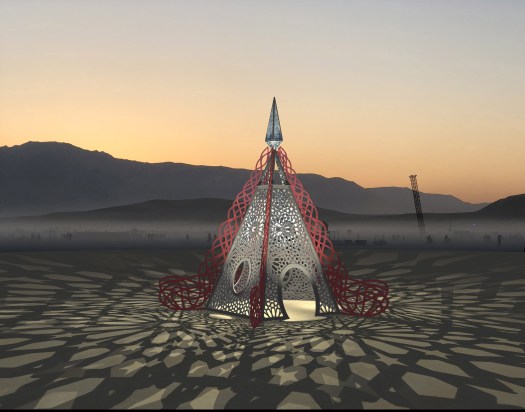
 Out of this “blank canvas”, free of normal constraints, we can build our own vibrancy, in the most deeply authentic way possible, with the work of our own hands. This freedom invites us to explore our innermost motivations, to ask ourselves “what would we do?” out in the dust, for one idyllic week, if for no other reason, than to build for the pure joy of gifting an experience to others. Yet, once back from this moment in the desert, the more fundamental question is, “What if even a small part of this sense of gifting came back with us from the Playa?” ….. what a delightful and humane world we might start to create.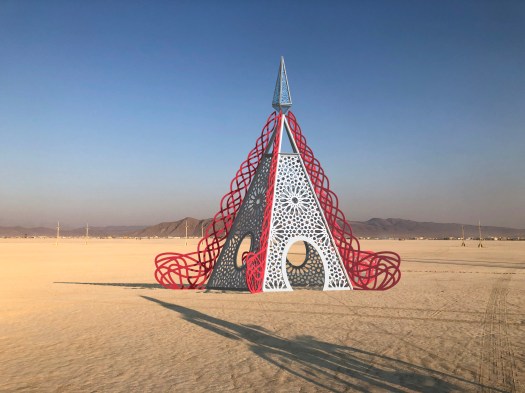

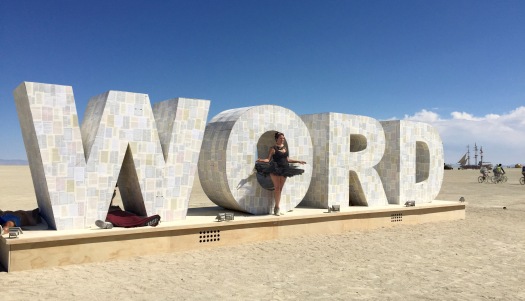 As architects we (and I am hoping this includes most of us here) strive to create buildings and cities that have a high degree of vibrancy, authenticity, and a strong sense of community. We desire an engaged population that not only loves their environment, but also participates in its creation, and in its ongoing evolution. The extension of which means they feel responsible for its maintenance and improvement and are inspired and empowered to infuse it with their cultural and artistic energy. They create traditions and rituals which carry this collective effort forward to successive generations. Ideally, this vibrancy extends across the full range of socio-economic strata, so that everyone participates and enjoys these benefits.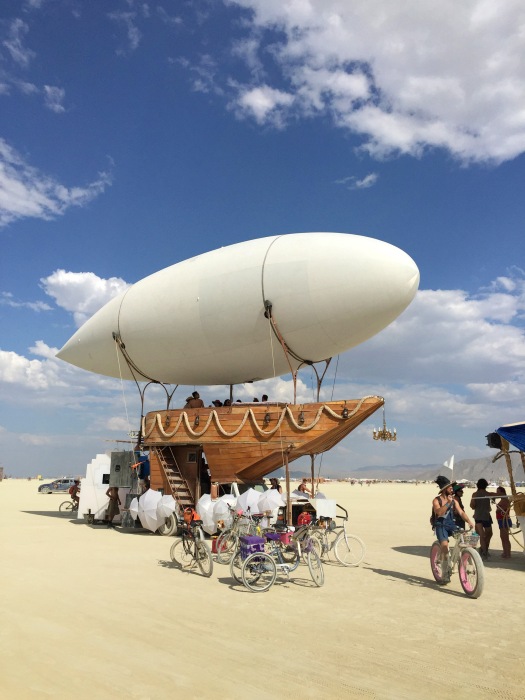
 Reflections on Shared Purpose