
This Summer John Marx discusses art, architecture and poetry with Matt Micucci on the InArteMatt podcast. This cross-disciplinary take on the arts leads to a conversation about beauty. A subject that architects often shy away from but one that is at the very heart of John Marx’s own design thinking and a recurring topic for his publications, lectures and exhibitions on architecture. As he explains during the podcast with Matt,
“Architects have not been allowed to design beautiful buildings in the last 50 years….at the dawn of post modernism emotion was cut out of design and the concept of beauty as only skin deep was reinterpreted to mean that anything beautiful was superficial. Lyrical expressionism is my rebellion against the notion that architecture should be emotionally meaningless. The idea of expressionism is that forms should be exciting, that they’re dynamic that they engage you and lyrical means that there’s a narrative that goes with it. The narrative is often a natural form that has a story that goes with the program and purpose of the building.”
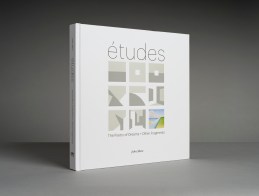 Interestingly, John has explored lyricism in a broad way through not only architectural discourse but also through both his art and poetry which have informed his understanding of how architecture should connect with people. Oro Editions’ recent book of John Marx’s paintings and poems, “Etudes: The Poetry of Dreams + Other Fragments”, demonstrates this and sheds light on how a wider cultural appreciation of the built form, memory, and place are what makes architecture emotionally meaningful. In fact, as a book, Etudes, really makes us think whether so many architects are missing out by not embracing other art forms in their search for a built form that resonates with the public at large.
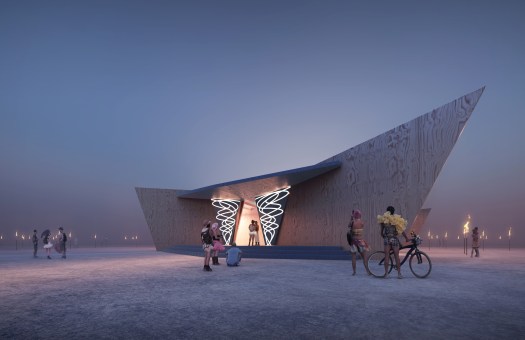
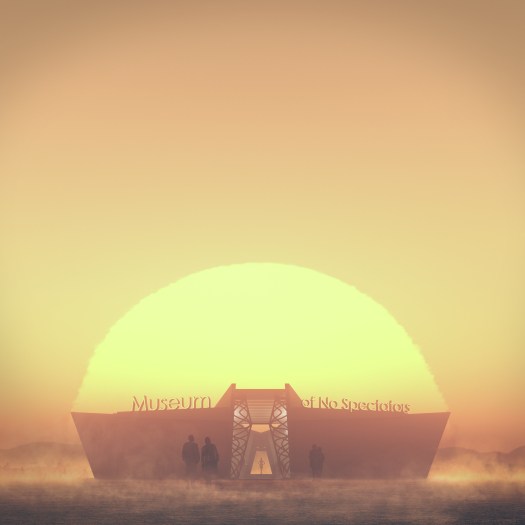
Marx is in favour of learning from artistic disciplines that are participatory and inclusive, celebrating different types of approaches and their expression. This has led him to take part in Burning Man and learn from how they have decommodified the arts, bringing the process of making and shared experience to the fore. And this year, John Marx has got together with Co-Lead Artist Absinthia Vermuth to explore this notion of participatory art further. The pair have worked on a project called “Museum of No Spectators”, a digital alternative to being at Burning Man in this pandemic year.
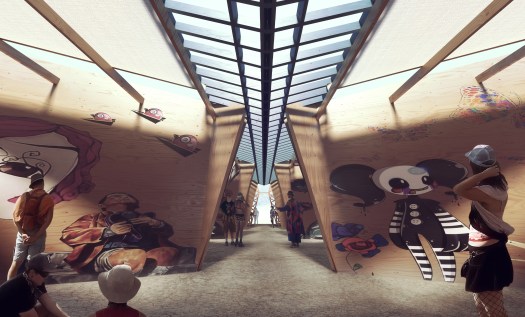
The Museum is made up of eight galleries that, as Marx says, have been designed to be “radically inclusive and interactive”, inviting viewers to rethink their relationship with the art world. In this way, The Museum of No Spectators shows how architecture can play an important role in moving cultural pursuits, that are so important to our identities, away from what has been a remote and increasingly outdated world of ivory towers. It is an important move with architecture as a powerful catalyst for readjusting and broadening the reach museums can have in society.
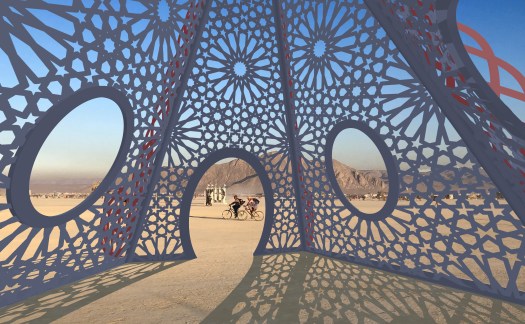
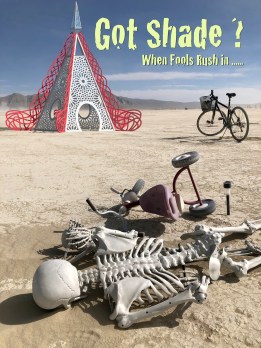
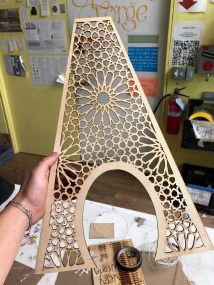
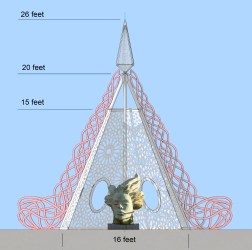 This year I was asked to join an art team as Lead Artist. The vision began with Team Leader Brian Poindexter, who was inspired by the Burning Man 2019 Theme Metamorphoses, to start an Art Project exploring the myth of Andromeda and the expansive nature of the night sky. We decided to challenge the classical myth of Andromeda, wherein a young woman is chained to a rock, left to be devoured by a sea monster that was sent by the Gods to punish her mother for the arrogance of proclaiming her daughter’s beauty. This led ultimately to the project name; Andromeda Reimagined. Within this new narrative, Andromeda saves herself, with the help of her community. The “rock and chains” have been morphed into a story of her inner journey to find strength and purpose in a world of chaos and absurdity. In the spirit of interactivity, we are asking people to write the names and stories of their female heroes on the inside walls of the structure. Following several reiterations, the final art piece takes the form of a 26 foot-tall, five-sided pyramid.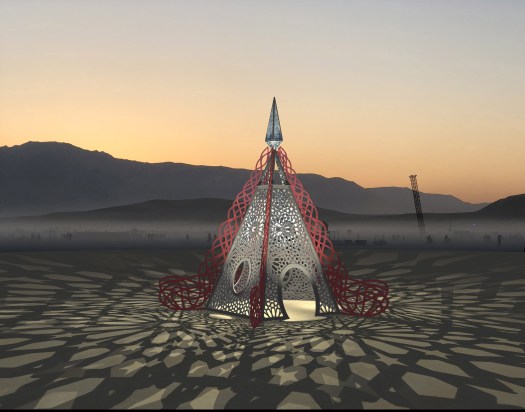
 Out of this “blank canvas”, free of normal constraints, we can build our own vibrancy, in the most deeply authentic way possible, with the work of our own hands. This freedom invites us to explore our innermost motivations, to ask ourselves “what would we do?” out in the dust, for one idyllic week, if for no other reason, than to build for the pure joy of gifting an experience to others. Yet, once back from this moment in the desert, the more fundamental question is, “What if even a small part of this sense of gifting came back with us from the Playa?” ….. what a delightful and humane world we might start to create.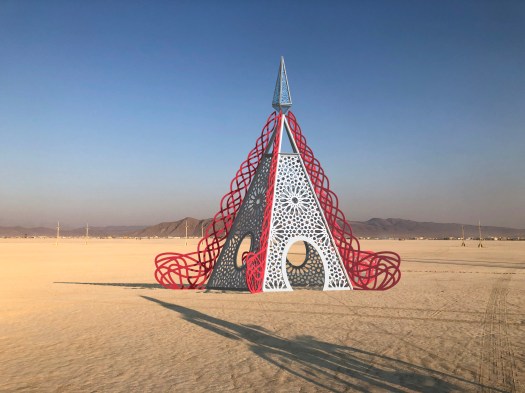
 Reflections on Shared Purpose